Why Do Muscles Get Sore After Exercise? DOMS Explained
Why are muscles sore a day after exercise? DOMS is delayed muscle damage and inflammation, not lactic acid. Here's what the science says.
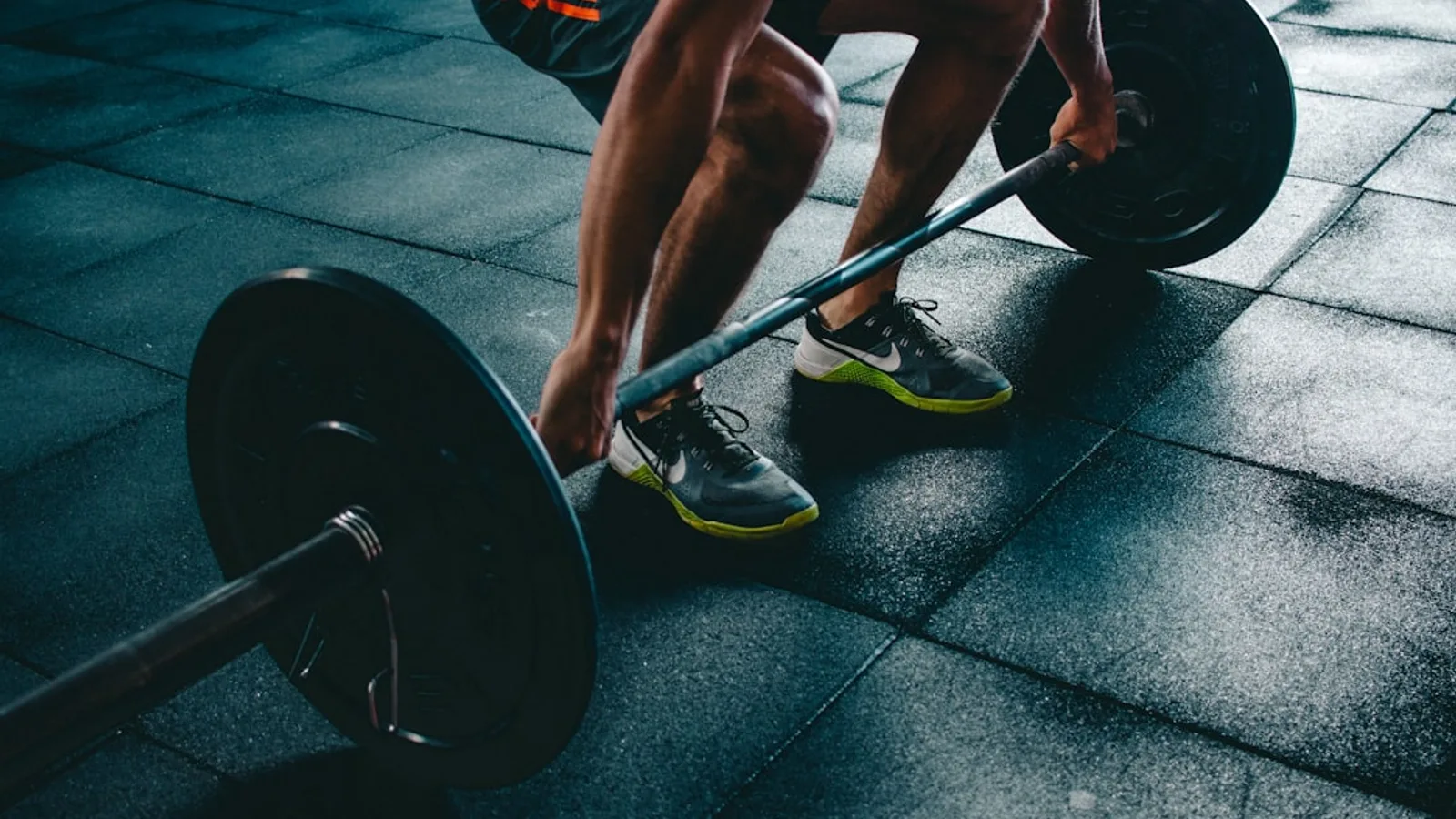
There’s a very specific kind of betrayal in waking up the morning after a hard leg day and discovering that sitting down on the toilet has become a genuine athletic event. The workout itself felt fine. You showered, ate dinner, went to bed feeling like a productive member of society. And then, roughly 24 to 48 hours later, your muscles decide to file their complaint.
This delay is the defining feature of what’s known as delayed onset muscle soreness, or DOMS, and it’s also the thing that makes it so strange. Most kinds of pain make sense to us because they show up right when the damage happens. DOMS breaks that pattern entirely, and figuring out why has kept exercise physiologists busy for decades.
The eccentric connection
DOMS shows up most reliably after unaccustomed exercise involving eccentric contractions, meaning any movement where a muscle lengthens while it’s still under tension [1]. Lowering a weight slowly instead of dropping it, controlling your body on the way down from a pull-up, or decelerating your leg after a kick are all eccentric actions. It’s a distinctly different kind of muscle work than the shortening (concentric) contractions most people picture when they think of “flexing,” and it turns out to be far more damaging at the cellular level.
The reason comes down to how force gets distributed within a muscle. During eccentric exercise, fewer motor units get recruited than during concentric or isometric work, which means each active motor unit ends up bearing a much greater share of the mechanical load [3]. That concentrated stress lands hardest on the weakest sarcomeres within a muscle fiber, the ones whose filament overlap happens to be a little further from ideal at that particular moment. As the muscle keeps lengthening, these weaker sarcomeres get stretched out disproportionately, sometimes past the point where their filaments overlap at all. Researchers call the result “popped sarcomeres” [3], an unusually literal term for a structure that’s been pulled past its ability to generate active tension.
What actually breaks
Once a sarcomere pops, the damage doesn’t stay contained. Myofibrils are physically anchored to the cell membrane, so overstretching sarcomeres can drag on and disrupt that anchoring structure, eventually compromising the membrane itself [3]. This is a big deal for a muscle cell, because the membrane is what keeps calcium concentrations tightly regulated between the inside and outside of the cell.
Once that membrane is damaged, calcium starts leaking in uncontrolled, and this single event seems to set off a cascade of downstream problems [1,3]. Elevated intracellular calcium activates a protein-degrading enzyme called calpain, which chews through structural proteins like desmin at the Z-disc regions of the sarcomere [3]. It also activates phospholipase A2, an enzyme that further damages the cell membrane, creating something of a feedback loop. On top of that, the extra calcium ends up concentrated in mitochondria, where it promotes the production of reactive oxygen species, adding oxidative stress on top of the mechanical damage that started the whole process [3].
You can actually track this damage indirectly. Creatine kinase, a protein that normally stays inside muscle cells, leaks into the bloodstream once membranes are compromised, and its plasma concentration is one of the most commonly used markers for how much muscle damage has occurred, typically peaking somewhere between 24 hours and several days after exercise depending on severity [1,3].
So why does the pain wait?
Here’s where things get interesting, because you’d expect pain to track pretty closely with the timeline of structural damage described above. It doesn’t, not exactly, and this mismatch has led researchers toward the idea that DOMS is less about damage itself and more about a change in how your muscle’s pain-sensing nerves behave afterward.
Uwe Proske, in a widely cited commentary on the topic, makes a point of calling DOMS a tenderness rather than a soreness, precisely because of this. Ordinary soreness hurts on its own. DOMS mostly doesn’t, at least not while you’re sitting still. Instead, contraction, stretching, and palpation of the affected muscle all become painful in a way they wouldn’t be in an unexercised muscle [4]. That pattern points toward a phenomenon called mechanical hyperalgesia, where nerve endings that respond to mechanical stimuli become sensitized and start firing in response to pressure or movement that would normally be completely unremarkable.
What’s notable is that this hyperalgesia can show up even without obvious tissue damage. One study cited in a major review found mechanical hyperalgesia developing in rat muscle one to three days after eccentric contractions, with no apparent microscopic damage or inflammation present at all [2].
That finding has pushed researchers to look specifically at two signaling pathways that seem to sensitize muscle nociceptors somewhat independently of the structural damage happening elsewhere in the cell: one involving bradykinin receptors and nerve growth factor, and another involving COX-2 and a glial cell line-derived neurotrophic factor [2]. Both pathways appear to be driven by muscle fibers or satellite cells producing neurotrophic factors that directly sensitize the nerve endings responsible for detecting mechanical pressure [2].
Proske also points to a strange piece of supporting evidence involving vibration. Strong mechanical compression on an unexercised calf muscle feels less unpleasant if you add high-frequency vibration on top of it, a kind of “rubbing it makes it better” effect [4]. But repeat that same combination on a muscle that’s already sore from DOMS, and the vibration makes the discomfort worse instead of better [4]. That reversal suggests something has actually changed in how the central nervous system is processing signals coming from the muscle, not just something different happening locally at the injury site.
Inflammation’s complicated role
For a long time, inflammation got blamed as the direct cause of DOMS, and it’s not hard to see why the theory was appealing. Muscle damage happens, immune cells show up to clean up debris, and pain follows. But the actual timeline complicates that simple story.
Neutrophils are typically the first responders, showing up in the muscle within hours of exercise-induced damage and beginning to clear cellular debris while also propagating the inflammatory response through cytokine signaling [2]. Somewhere between 24 and 48 hours later, monocytes and macrophages become the dominant cell type, and these cells go through a notable transformation over the following days, shifting from a pro-inflammatory M1 phenotype focused on clearing damaged tissue to an anti-inflammatory M2 phenotype that instead supports muscle repair and regeneration [2,3]. This shift from M1 to M2 macrophages appears essential for the muscle to actually rebuild, not just tear itself down [2,3].
Interestingly, this whole inflammatory process now looks less like collateral damage and more like a necessary part of recovery. Research has found that if you block or reduce certain inflammatory responses after muscle-damaging exercise, it actually interferes with muscle regeneration and adaptation, rather than helping [2]. So the inflammation showing up around the same time as your soreness isn’t necessarily the villain, and treatments aimed at suppressing it entirely might do more harm than good for long-term muscle repair, even if they take the edge off the discomfort in the short term.
What actually happens over the following days
Putting the timeline together, muscle strength typically drops immediately after eccentric exercise and continues declining somewhat over the following day, with a documented “second dip” showing up around 20 to 24 hours post-exercise that’s thought to reflect additional inflammatory damage or possibly central inhibition caused by pain itself [3]. Range of motion tends to be reduced immediately and starts recovering within about a day. Swelling develops more gradually, often peaking somewhere between 4 and 10 days after exercise [3]. And soreness itself typically appears 12 to 48 hours post-exercise, peaks around 24 to 72 hours, and resolves within about a week in cases of mild to moderate damage [3].
One useful finding from this research is that soreness correlates surprisingly poorly with the actual extent of muscle damage and inflammation [2,3]. In other words, how sore you feel isn’t a particularly reliable gauge of how much structural repair work your muscle actually needs, which is a good thing to keep in mind before assuming a pain-free muscle is fully recovered, or a very sore one is seriously injured.
The repeated bout effect
If there’s an encouraging piece of biology in all of this, it’s that muscles remember. After an initial bout of unaccustomed eccentric exercise, the same muscle becomes measurably more resistant to damage the next time it performs a similar workout, producing less soreness, smaller strength deficits, and a faster recovery [1,2,3]. This protection appears to come from a combination of neuromuscular, mechanical, and cellular adaptations, including increases in connective tissue, changes to the contractile machinery, and a dampened inflammatory response on subsequent bouts [3]. It’s part of the reason your second week of a new workout program tends to feel dramatically less brutal than your first, even if you’re doing the exact same exercises at the exact same intensity.
Does anything actually help?
The honest answer is that the evidence for most popular DOMS remedies is a mixed bag. Stretching doesn’t meaningfully reduce DOMS, likely because the underlying cause is structural cellular damage rather than muscle tightness [1]. The old idea that DOMS comes from lactic acid buildup is also firmly debunked, both because lactate clears from muscle tissue within about an hour, and because eccentric contractions, which cause the most DOMS, actually produce less lactate than concentric ones [1].
Cold water immersion has an inconsistent track record. Some reviews report that it, along with massage and compression garments, reliably improves the subjective experience of soreness [2]. But a randomized controlled trial comparing cold water immersion against tepid water in untrained volunteers found no statistically significant benefit on creatine kinase levels, muscle circumference, or perceived tenderness [1]. Massage has more consistent support, with at least one study showing it reduces inflammatory signaling markers directly in muscle tissue after exercise [2]. The most reliable strategy by far remains simply easing gradually into new or more intense activity, since the extent of damage scales closely with how unaccustomed and intense the exercise is relative to what the muscle is used to [1].
Summary
DOMS turns out to be a layered phenomenon, built from mechanical damage at the level of individual sarcomeres, a calcium-driven cascade of further cellular injury, a carefully timed and surprisingly beneficial inflammatory response, and a separate process of nerve sensitization that may not depend on visible tissue damage at all. The delay that makes DOMS so confusing in the first place isn’t a mystery so much as a reflection of how many different biological processes have to unfold, each on its own timeline, before your nervous system starts registering the whole thing as pain.
So the next time you’re wincing your way down a staircase two days after a hard workout, you can take some comfort in knowing that soreness is mostly a sign of a well-functioning repair process doing its job, not a muscle that’s been seriously harmed.
Common Questions
Is DOMS caused by lactic acid buildup?
No, and this is one of the most persistent myths in fitness. Lactate has a half-life of only 15-25 minutes and clears from muscle within about an hour, so it can't be responsible for pain that shows up a day or two later. It's also worth noting that eccentric contractions, which produce the most DOMS, actually generate less lactate than concentric contractions.
Does stretching before or after exercise prevent DOMS?
No. Since DOMS originates from actual structural changes at the cellular level rather than simple muscle tightness, stretching doesn't address the underlying cause and hasn't been shown to meaningfully reduce soreness.
Is it safe to exercise a muscle that's still sore?
Generally yes. Continued use of sore muscles typically doesn't harm recovery as long as you're allowing adequate rest between hard sessions. There's also a well-documented 'repeated bout effect,' where a muscle that has already experienced DOMS becomes noticeably more resistant to damage the next time it performs the same exercise.
Does cold water immersion actually help with muscle soreness?
The evidence is mixed. Some studies and meta-analyses report that cold water immersion, along with massage and compression garments, consistently improves the perception of soreness. But at least one randomized controlled trial found no significant benefit on soreness, strength, or blood markers of muscle damage compared to tepid water, so it isn't a guaranteed fix.
References
- [1]Meltsakos C. Delayed Onset Muscular Soreness: A Look into Post-exercise Pain. Quill & Scope. 2013
- [2]Peake JM, Neubauer O, Della Gatta PA, Nosaka K. Muscle damage and inflammation during recovery from exercise. J Appl Physiol. 2017
- [3]Stožer A, Vodopivc P, Križančić Bombek L. Pathophysiology of Exercise-Induced Muscle Damage and Its Structural, Functional, Metabolic, and Clinical Consequences. Physiol Res. 2020
- [4]Proske U. Muscle tenderness from exercise: mechanisms? J Physiol. 2005