Why Do Muscles Cramp? The Science Behind a Very Common Mystery
Dehydration and electrolytes get blamed for cramps, but the evidence points somewhere else entirely: your spinal cord.
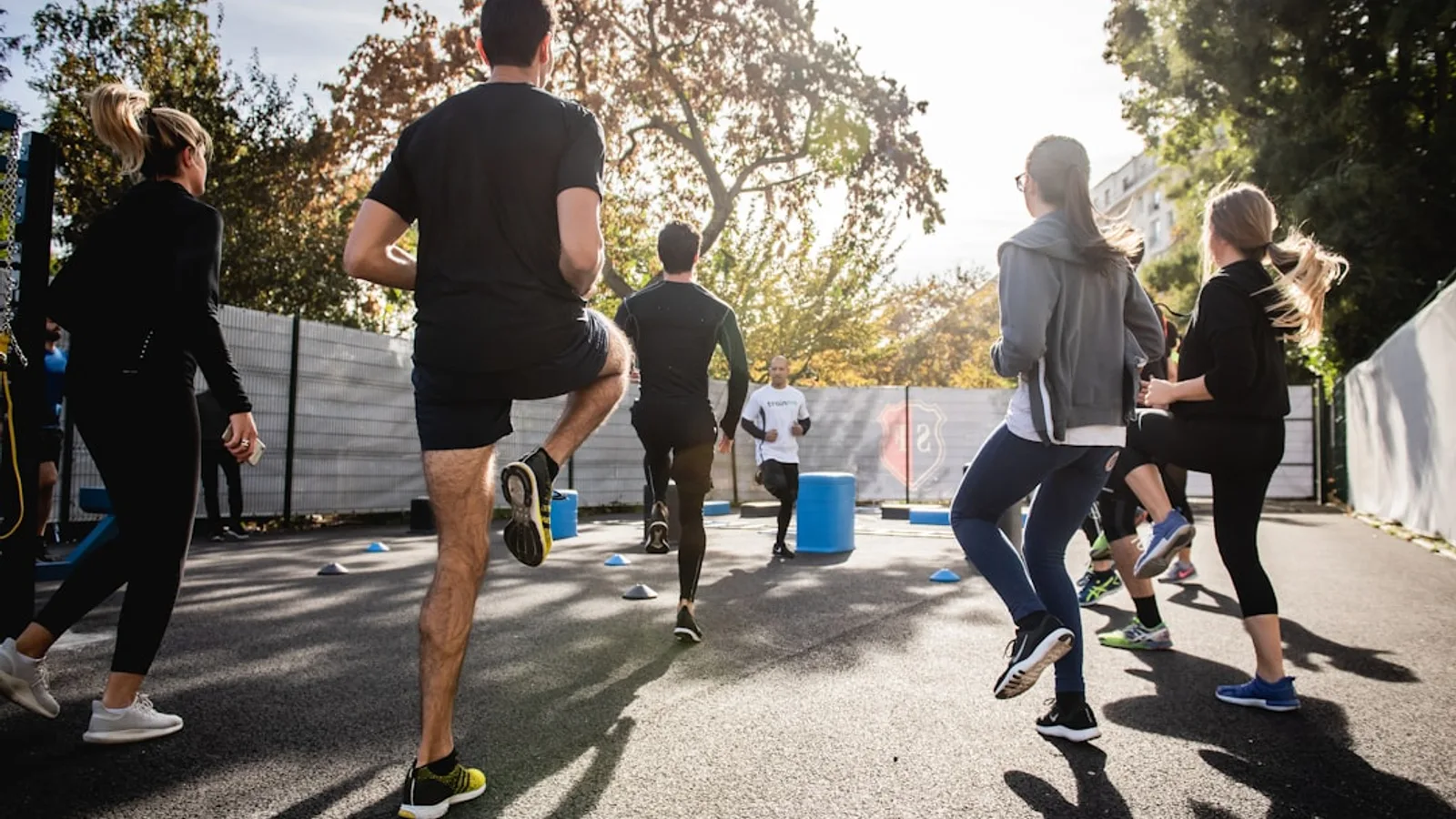
Almost everyone has had a cramp. Mid-run, mid-swim, or at 3am for no reason at all, a muscle suddenly locks into a hard, painful knot that you cannot voluntarily relax. It is one of the most common things that happens to a human body during exercise, and yet the explanation most people reach for (dehydration, or “you need more electrolytes”) is the one theory that has the least scientific support behind it. So what is actually going on?
What a cramp actually is
A muscle cramp is defined as a sudden, involuntary, painful contraction of a muscle or part of it, one that resolves on its own within seconds to minutes and is often accompanied by a palpable hardening or knotting of the muscle [3]. That last detail matters for diagnosis: cramps are electrically active on EMG, which distinguishes them from a contracture, where the muscle is just as rigid but electrically silent because the problem is with calcium handling inside the muscle fibre rather than the nerve driving it [1].
Cramps also have a specific signature. The muscle groups most likely to cramp are ones that cross two joints, like the calf (gastrocnemius), hamstrings, and quadriceps [1,3]. They tend to happen when that muscle is already in a shortened position, and they show up most often later in exercise, when fatigue has had time to accumulate [1,4]. None of this is random. It is a pattern that any decent hypothesis needs to explain, and it turns out to be the pattern that eventually broke the dehydration theory.
The theories that didn’t hold up
For most of the 20th century, exercise-associated muscle cramps (EAMC) were explained by one of four theories: dehydration, electrolyte imbalance, inherited metabolic disorders, or heat [1]. Each had a plausible story attached, and each has since been tested directly and found wanting.
Dehydration and electrolytes. The original case reports linking cramping to fluid and salt loss came from miners, stokers, and cane cutters working in hot conditions in the early 1900s, but these were observational and the workers were often treated with fluid and electrolytes simultaneously, so it was never possible to isolate which one (if either) mattered [1,3]. When researchers finally ran controlled comparisons, the theory fell apart. In one study of marathon runners, there was no difference in body mass loss, blood volume, or plasma volume between 15 runners with cramps and 67 without, both before and after the race [1]. A separate ultra-distance study of 22 crampers and 21 controls found the same thing, with a complete disconnect between post-race recovery from cramping and any changes in serum electrolyte levels [1]. Sodium supplementation during ultramarathons also failed to differ between those who cramped and those who didn’t [3]. If cramping were truly about systemic dehydration or electrolyte loss, it should show up in muscles that weren’t even being used. Instead it only shows up in the muscles doing the work [1].
Metabolic and environmental theories. Inherited metabolic disorders like McArdle’s disease can absolutely cause cramping, but they look nothing like an ordinary exercise cramp clinically. They are recurrent, severe, commonly involve myoglobin in the urine, and run strongly in families, while ordinary EAMC is intermittent, rarely severe, and only weakly familial [1]. As for heat, the idea that cramps are just “heat cramps” doesn’t survive scrutiny either. Passive heating at rest doesn’t cause cramping, cooling doesn’t relieve it and can sometimes make it worse, and heat stroke itself is not characterized by cramping [1]. Cold exposure has also been linked to cramping in swimmers, which is hard to square with a purely heat-based explanation [1].
So where does a cramp actually start?
If it isn’t fluid, salt, or heat, the next question is where in the body the problem originates. There have been two competing hypotheses here: a peripheral origin, where the nerve terminals inside the muscle itself start firing spontaneously, and a central origin, where the problem sits at the level of the spinal motor neuron [4].
This got tested directly with a clever experiment. Researchers electrically induced cramp-like contractions in the abductor hallucis muscle (a small foot muscle) under two conditions: once with the nerve intact, and once with a peripheral nerve block in place that cut off communication with the spinal cord [4]. If cramps were purely a peripheral phenomenon, blocking the nerve shouldn’t change much. Instead, the contractions were dramatically different. With the nerve intact, contractions lasted 55 to 75 seconds and required a lower stimulation frequency to trigger. With the nerve blocked, the “cramps” lasted only 1.5 to 5 seconds and needed a higher frequency to set off [4]. The motor unit firing patterns also looked completely different: intact contractions showed the gradual decline in firing rate typical of a normal voluntary contraction, while blocked contractions showed short bursts of high, erratic firing that looked nothing like an ordinary motor neuron discharge [4].
That result is fairly hard to argue with. A real cramp needs the spinal loop intact to develop and sustain itself, which points squarely at the central nervous system rather than something going wrong locally in the muscle fibre.
The reflex loop that seems to be responsible
Once the central origin was established, the next question was what specifically goes wrong at the spinal level. This is where two structures come in: the muscle spindle, which senses stretch and sends excitatory signals to the motor neuron, and the Golgi tendon organ (GTO), which sits in the tendon and sends inhibitory signals when it detects tension [1].
In fatigued muscle, animal studies found that these two systems move in opposite directions. Muscle spindle afferent firing increases with fatigue, while GTO afferent firing decreases dramatically [1]. Put those together and you get a spinal motor neuron receiving more “go” signal and less “stop” signal at the same time, which is a reasonable recipe for a muscle that won’t relax.
This also explains why the two-joint muscles like the calf and hamstrings are the usual suspects. These muscles are often contracted in an already shortened position during exercise, and a shortened muscle produces less tension on its own tendon, which further reduces GTO output right when it’s needed most [1]. The classic example is a swimmer cramping in the calf: the ankle is maximally plantarflexed during the kick, which slackens the Achilles tendon and mutes the one signal that would normally help the muscle relax [1].
Human data backs this up. Surface EMG recorded in runners during actual cramp episodes at an ultramarathon showed elevated baseline muscle activity between cramps, and the runners whose baseline activity dropped fastest were the ones who recovered fastest [1]. During an acute cramp, EMG activity fell dramatically within 15 to 20 seconds of a passive stretch, which lines up neatly with the idea that stretching works by driving GTO-mediated inhibition back up [1,3].
Why the “electrolyte drink” advice sticks around anyway
If none of this is really about electrolytes, why does the advice persist, and why do some remedies that don’t contain much sodium or potassium seem to work? Small amounts of pickle juice have been shown to relieve electrically induced cramps roughly 45% faster than no fluid at all, and the effect shows up around 90 seconds, which is far too fast to be explained by electrolyte absorption. It also happens without measurable changes in plasma electrolyte concentration or osmolality [3]. The leading explanation is that the vinegar in pickle juice triggers a reflex through receptors in the mouth and throat that inhibits motor neuron activity, essentially a nervous system shortcut rather than a mineral replacement [3,4]. Mustard shows a similar pattern anecdotally. It looks like relief, but it isn’t relief via the mechanism most people assume.
This doesn’t mean hydration and electrolytes are irrelevant to athletic performance generally, just that they aren’t the driver of the cramp itself for most people.
Cramps versus spasms: a genuinely confusing overlap
One more wrinkle worth knowing about: cramps and “muscle spasms” (the term used for involuntary contractions in conditions like spinal cord injury, stroke, or cerebral palsy) may be more related than the separate vocabulary suggests. A 2024 scoping review of 253 studies on patients with these upper motor neuron conditions found that only 7 used the word “cramp,” while 217 used “spasm,” and just 29 used both [2]. Of those 29, only two studies drew a clear line between the terms [2]. When the reviewers compared the clinical features actually described for spasms against a checklist of well-known cramp features (painful, sudden onset, relieved by stretching, tied to fatigue), the overlap was substantial [2]. Their conclusion was blunt: there is currently no reliable way to distinguish a cramp from a spasm based on the clinical data available in the literature, and clinicians may be under-recognizing cramps in neurological patients simply because everyone defaults to calling involuntary contractions “spasms” in that context [2].
Where this leaves us
The current best explanation, sometimes called the altered neuromuscular control theory, is that EAMC results from local muscle fatigue disrupting the normal balance between excitatory input from the muscle spindle and inhibitory input from the Golgi tendon organ, which lets the alpha motor neuron fire in a sustained, involuntary way [1,4]. More recent models frame this as multifactorial rather than caused by fatigue alone: things like prior injury, poor conditioning, unaccustomed exercise intensity, and even psychological stress can all push a person toward their individual “cramp threshold,” with fatigue as one contributing factor among several rather than the sole cause [3].
What that means practically is that the fastest reliable treatment for an active cramp is still gentle stretching, not fluids [3]. And for people who cramp frequently, the more useful questions to ask are about training load, conditioning, sleep, and prior injury history rather than reaching immediately for a sports drink [3]. It is a good example of how a symptom that feels completely mechanical (a muscle just locking up) turns out to be a nervous system problem almost the whole way down.
Common Questions
Is dehydration actually the cause of exercise cramps?
The evidence doesn't support it. Multiple prospective studies comparing runners with and without cramps found no differences in body mass loss, plasma volume, or blood volume between the two groups, both before and after racing.
Will drinking a sports drink or eating a banana stop a cramp?
Probably not quickly. Oral fluids take around 13 minutes to reach the bloodstream, and small amounts of pickle juice or mustard relieve cramps well before any electrolytes could plausibly be absorbed, which points to a reflex effect rather than a mineral one.
Why does stretching work so fast on a cramp?
Stretching the muscle activates the Golgi tendon organ, a sensor in the tendon that sends an inhibitory signal to the motor neuron controlling that muscle. That inhibitory signal appears to override whatever is driving the cramp, and EMG recordings show muscle electrical activity dropping within 15 to 20 seconds of a stretch.
Are muscle cramps and muscle spasms the same thing?
They're clinically very hard to tell apart. A 2024 review of 253 studies on patients with neurological conditions found that only about 10 percent of papers even bothered to define either term, and when both terms were used in the same study, only two out of 29 studies drew a clear distinction between them.
References
- [1]Schwellnus MP, Derman EW, Noakes TD. Aetiology of skeletal muscle 'cramps' during exercise: a novel hypothesis. J Sports Sci. 1997
- [2]Miller KC, McDermott BP, Yeargin SW, Fiol A, Schwellnus MP. An evidence-based review of the pathophysiology, treatment, and prevention of exercise-associated muscle cramps. J Athl Train. 2022
- [3]Minetto MA, Holobar A, Botter A, Farina D. Origin and development of muscle cramps. Exerc Sport Sci Rev. 2013
- [4]Therkildsen ER, Kaster P, Nielsen JB. A scoping review on muscle cramps and spasms in upper motor neuron disorder. Front Neurol. 2024