Why Do We Have an Appendix If It Seems Useless?
For over a century the appendix was written off as a vestigial leftover. New evolutionary and microbiome research tells a very different story.
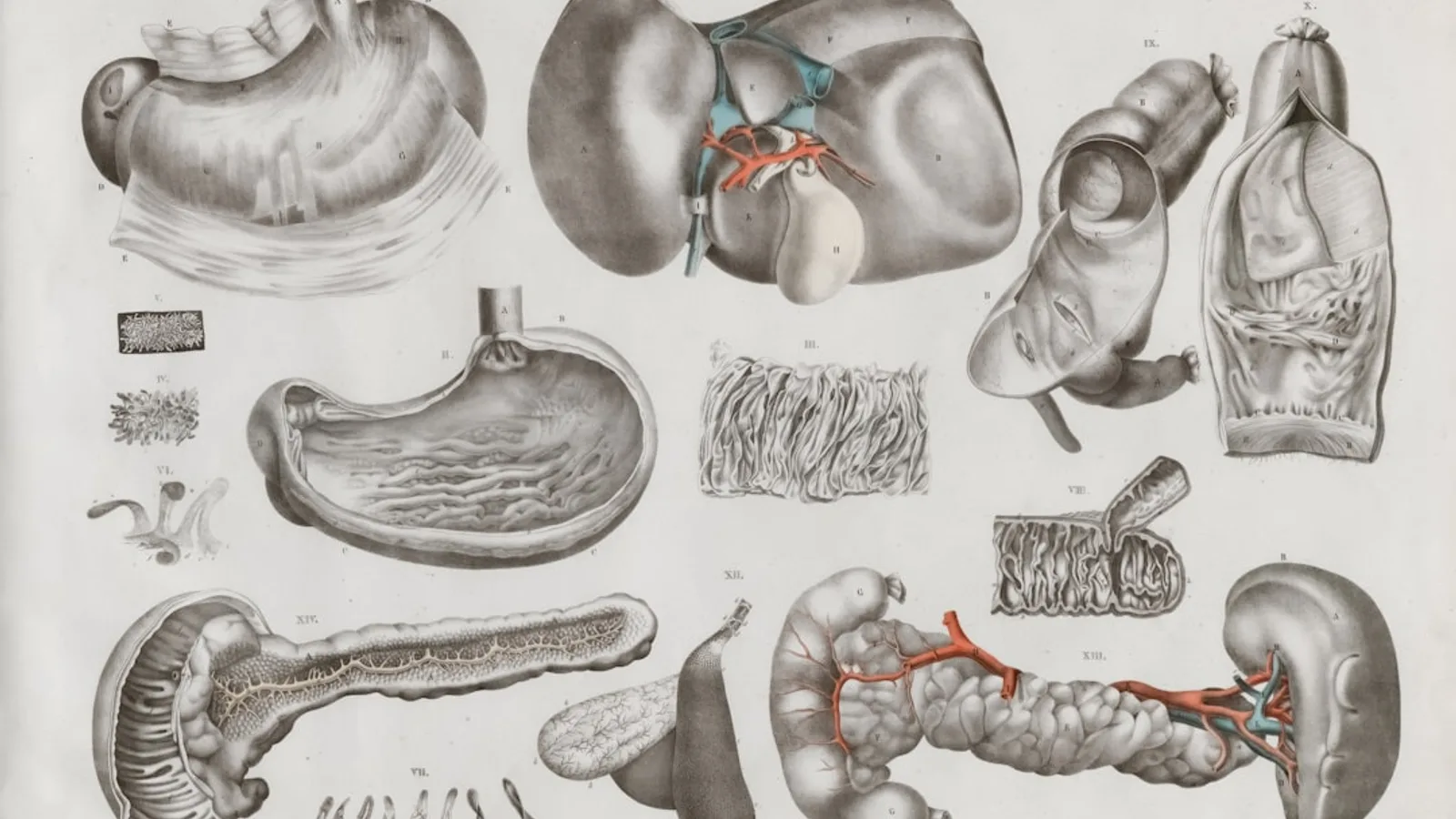
If you had your appendix out as a kid, chances are someone told you it didn’t matter. It was extra. A leftover part from some ancestor who ate different food, sitting there with nothing to do except occasionally get infected and try to kill you. That story has been repeated so often that most people never question it. It turns out the story is wrong, or at least badly outdated, and the research explaining why has been piling up fast.
The old theory, and why it made sense at the time
The vestigial idea comes from a real observation. In herbivores like rabbits, the cecum, the pouch where the small intestine meets the large intestine, is enormous. It’s a fermentation chamber built for breaking down cellulose from plant matter, and many of these species have an appendix-like structure hanging off the end of it. Humans have a tiny cecum by comparison, and we can’t digest cellulose at all. So the logical leap was that our appendix is what’s left of an ancestral fermentation organ we no longer need, shrunk down to uselessness once our diet changed [5].
Darwin himself treated the appendix this way, describing it as a shrinking structure inherited from a more herbivorous ancestor. For well over a century that was the accepted explanation, and it’s still what gets taught in a lot of biology classes.
The evolutionary math doesn’t support it
Here’s the problem. If the appendix really were a random evolutionary remnant with no function, you’d expect it to show up in a scattered, arbitrary way across the animal kingdom, and you’d expect species to lose it about as often as they gain it. That’s not what the data shows.
A team led by Heather Smith mapped appendix presence onto a mammalian family tree at the species level and found something striking: the appendix evolved independently at least 29 separate times across different mammalian lineages, including primates, rodents, lagomorphs, and marsupials, and was lost a maximum of 12 times [5]. That’s a heavily lopsided ratio. Traits that are neutral, meaning they don’t help or hurt an animal’s chances of survival, tend to appear and disappear at roughly similar rates over evolutionary time. A structure that keeps independently reappearing in unrelated lineages, and rarely gets lost once it shows up, is the signature of something under active selection. In plain terms: evolution kept reinventing the appendix because having one was worth something.
It also isn’t a great-ape-only trait, as Darwin assumed. Later surveys found some form of cecal appendix in Old World monkeys, New World monkeys, lemurs, several rodent species, and multiple marsupial lineages, each with its own distinct shape [5]. That kind of scattered, repeated appearance across the mammalian tree makes “it’s just a leftover” a much harder argument to defend.
So what is it actually doing
The most influential answer came out of Duke University in the mid 2000s, when researchers studying the human large intestine noticed something unexpected about biofilms, which are dense colonies of bacteria living in a protective mucus-like layer along the gut lining. Biofilm density wasn’t even across the colon. It was heavily concentrated in the appendix and dropped off steadily the farther you moved away from it [5].
That observation led to what’s now called the safe house hypothesis. The appendix sits off to the side of the main digestive tract, connected to the gut but not directly in the path of the fecal stream. Its lumen is narrow. During a bout of diarrhea or another gastrointestinal illness, the main flow of the gut gets flushed out hard, taking most of the resident bacterial population with it, both the harmful and the beneficial kinds. Tucked away in its side pocket, the appendix’s biofilm is largely spared from that flushing. Once the illness passes, bacteria shed from the appendix can recolonize and repopulate the rest of the colon [5].
This lines up with the fact that appendix tissue harbors a bacterial community that is clearly distinct from, and often as diverse as, what’s found in the colon itself, and closely resembles the community found in the rectum [3]. It behaves less like a random pouch and more like a dedicated reservoir.
The appendix has a second job that’s just as important. It’s dense with lymphoid tissue, similar in structure to Peyer’s patches, which are immune structures found elsewhere in the small intestine. This tissue is a major production site for immunoglobulin A, an antibody that helps regulate the density and composition of gut bacteria [1,3,4]. So the appendix isn’t just storing bacteria passively. It’s actively involved in deciding which bacteria get to stick around.
Researchers have debated whether these two roles, immune tissue and bacterial reservoir, evolved together or separately, and there’s a reasonable case that the appendix’s immunological function actually predates the digestive function of the cecum it’s attached to, meaning the immune role might be the older and more fundamental one [2].
What happens when it’s gone
If the appendix were truly useless, removing it should change nothing measurable. That’s mostly true in the short term. People who have appendectomies generally recover fine and go on to live normal lives. But the picture gets less clean the longer you look.
Studies comparing gut microbiomes in people with and without a history of appendectomy have found real, lasting differences. People who’ve had the surgery tend to show reduced overall microbial diversity, along with lower levels of specific beneficial genera like Roseburia and Butyricicoccus, both of which are known for producing short-chain fatty acids that support colon health [4]. Some of these differences were still measurable five years after the surgery [4].
Appendectomy has also been associated, in various studies, with higher rates of inflammatory bowel disease, cardiovascular disease, worse outcomes from recurrent C. difficile infection, and in some research, Parkinson’s disease, although the evidence on that last link is decidedly mixed and some studies find no connection at all [1,3,4]. The link to colorectal cancer risk is similarly contested: some large cohort studies report an increased risk after appendectomy, while others find no overall increase, or even a protective association [4]. Nobody is claiming the appendix is essential for survival. But the growing consensus is that losing it seems to nudge the gut’s bacterial ecosystem in a less favorable direction, even if the practical health consequences are usually subtle.
There’s also an emerging thread connecting the appendix microbiome to the gut-brain axis, the communication network linking the digestive system and the central nervous system. Some of the bacterial species concentrated in the appendix are known producers of neurotransmitters or their precursors, including GABA, serotonin, and dopamine, and disruptions to this bacterial population have been proposed as a contributing factor in certain neurological and mood-related conditions [1]. This is one of the newer and more speculative areas of the research, and the mechanisms are still being worked out, but it adds another layer to why the appendix’s bacterial community might matter beyond digestion.
Why it gets inflamed at all
None of this explains why the appendix causes so much trouble in modern life. Appendicitis is one of the most common reasons for emergency abdominal surgery, and it has a fairly well supported explanation: obstruction of the appendix’s narrow lumen, frequently caused by a fecalith, a hardened lump of stool [5].
This connects back to diet in a fairly direct way. Fecalith formation is more common with the low-fiber diets typical of industrialized countries, and appendicitis rates are correspondingly far higher in industrialized nations than in populations eating high-fiber traditional diets [5]. Rates tend to climb whenever a population shifts toward a more Western diet, which is a pretty strong signal that this is a diet-driven problem rather than some inherent flaw in the organ itself.
There’s also the long-running “hygiene hypothesis,” the idea that overly sanitized environments prevent the immune system from developing normally, leading to overreactions like appendicitis. It’s a popular explanation, but more recent research has pushed back on it once diet is controlled for, and several studies have found no clear link between hygiene levels and appendicitis risk after accounting for fiber intake [5]. The organ that supposedly serves no purpose seems to get inflamed mainly because of what we’re eating, not because it’s a design flaw.
The bigger picture
None of this means you desperately need your appendix to survive, and if it’s inflamed, remove it. But the vestigial label has aged badly. An organ that keeps independently evolving across dozens of unrelated mammal lineages, concentrates immune tissue, hosts a bacterial community distinct from the rest of the gut, and shows measurable downstream effects when it’s removed doesn’t look like a leftover. It looks like a small, easy to overlook piece of infrastructure that spent most of human history quietly doing its job, and only became a liability once modern diets started jamming it up.
Common Questions
Is the appendix actually vestigial?
Probably not. A 2017 phylogenetic analysis mapped the appendix onto the mammalian family tree and found it evolved independently at least 29 separate times and was lost only a maximum of 12 times. That lopsided ratio is what you'd expect from a trait under positive selection, not a leftover with no function.
What does the appendix actually do?
The leading explanation is the 'safe house' hypothesis. The appendix is packed with biofilm that shelters beneficial gut bacteria, protecting them from being flushed out during a bout of diarrhea so they can re-inoculate the colon afterward. It also concentrates lymphoid tissue that produces immunoglobulin A, which helps regulate the gut's bacterial population.
Is it safe to have your appendix removed?
In the short term, yes, most people recover with no obvious issues. But several studies have linked appendectomy to lower long-term gut microbial diversity and higher rates of conditions including inflammatory bowel disease, recurrent C. difficile infection, and in some studies colorectal cancer, though the evidence on cancer risk is mixed.
Why does the appendix get inflamed in the first place?
The most consistent explanation is obstruction of its narrow lumen, often by a hardened piece of stool called a fecalith. Low-fiber diets are associated with higher fecalith formation and higher appendicitis rates, which lines up with appendicitis being far more common in industrialized nations than in places with high-fiber traditional diets.
References
- [1]Sagor MS, et al. The functional landscape of the appendix microbiome under conditions of health and disease. Gut Pathog. 2025;17:38
- [2]Sharma N, Kaur B, Saxena A. Re-evaluating the Human Appendix: Vestigial or Immunological Guardian. J Adv Sci Res. 2024;15(7):1-4
- [3]Girard-Madoux MJH, et al. The immunological functions of the Appendix: An example of redundancy? Semin Immunol. 2018;36:31-44
- [4]Islam T, et al. Exploring the Immunological Role of the Microbial Composition of the Appendix and the Associated Risks of Appendectomies. J Pers Med. 2025;15:112
- [5]Smith HF. A review of the function and evolution of the cecal appendix. Anat Rec. 2023;306:972-982