Why Do Humans Cook Food? How Fire Changed Our Biology
Cooking isn't just a cultural habit. It rewired human digestion, teeth, and gut size and may have made our big brains possible.
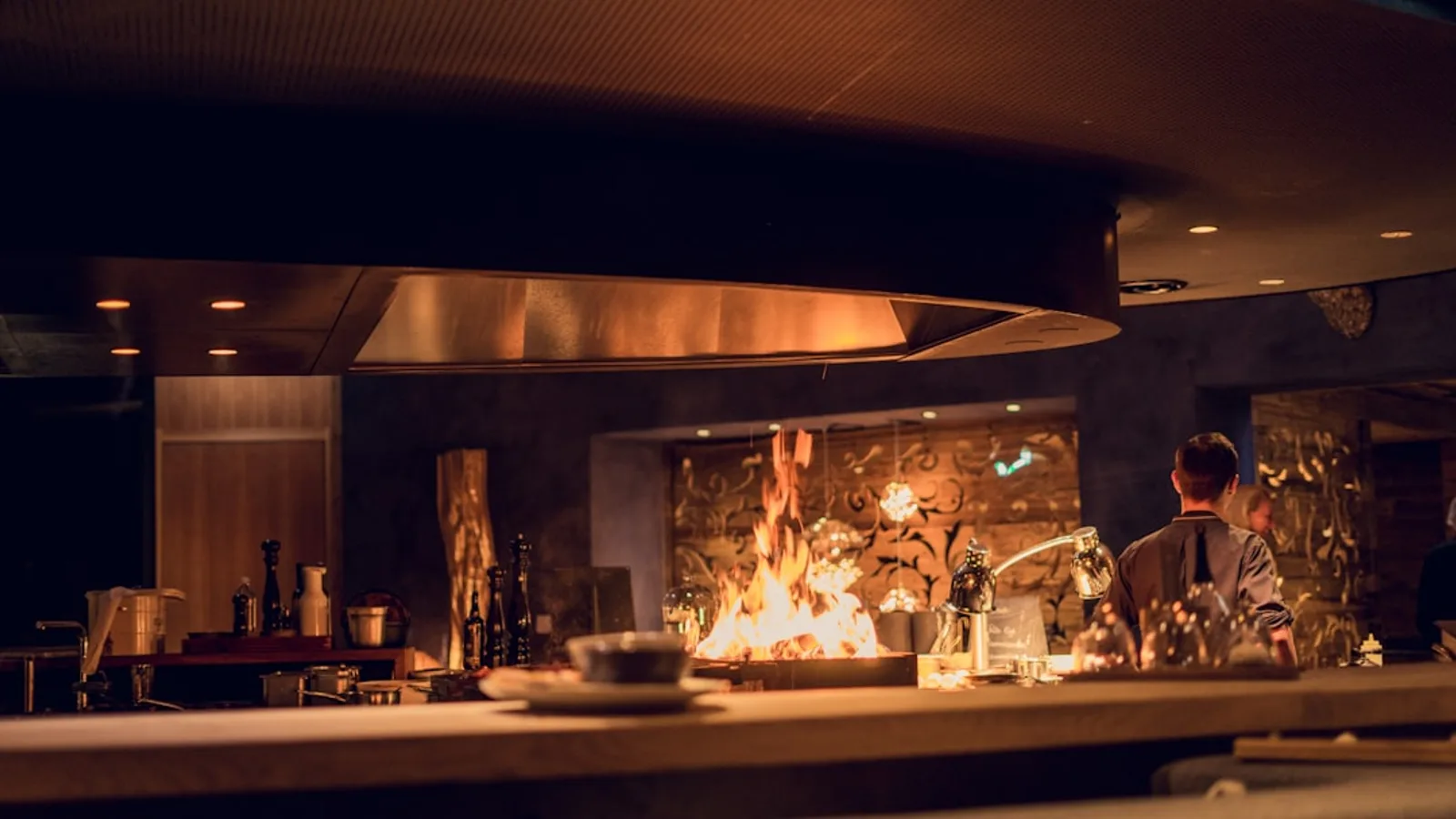
Every human society on record cooks its food. Not some societies, not most societies, all of them [1]. That alone is a strange biological fact. No other primate does this, and yet it shows up everywhere humans do, regardless of climate, available fuel, or what’s actually on the menu. For most of the twentieth century, evolutionary biologists treated this as a footnote, a nice cultural trick that broadened the diet but nothing more. That view has been changing. A growing body of digestibility research suggests cooking didn’t just make food taste better. It changed how much energy humans could extract from a given meal, and that change may have reshaped human anatomy from the teeth down to the gut.
Cooking is a chemistry problem, not just a kitchen skill
Heat does a few specific things to food that nothing else does as efficiently. It gelatinizes starch, unwinding the semi-crystalline granules in raw starch into a loose, amorphous structure that digestive enzymes can actually access [1]. It denatures protein, unfolding the tightly wound structures into a form that’s far easier for proteolytic enzymes to break apart [2]. And it kills the bacteria that would otherwise force the immune system into an expensive, ongoing fight [1].
Grinding, pounding, and soaking can do some of this too, and there’s decent evidence that early hominins were doing exactly that long before anyone controlled fire [1]. But non-thermal processing has a hard limit. Starch granules are so small, typically 2 to 100 microns across, that even modern industrial milling barely damages them [1]. You can pound a raw tuber into a paste and it still won’t gelatinize the starch inside it. Heat is doing something mechanical processing can’t replicate.
The digestibility numbers are bigger than you’d expect
The clearest way to see cooking’s effect is to look at ileal digestibility, meaning how much of a nutrient is actually absorbed before it reaches the colon, rather than how much simply disappears somewhere along the gut (fecal digestibility, the older and less accurate measure, doesn’t distinguish between nutrients absorbed by the human and nutrients consumed by gut bacteria) [1].
For starch, the increase in digestibility from cooking ranges from about 12 percent for oats up to 35 percent for green bananas, with potatoes and plantains landing around 30 percent [1]. For protein, the best available human data comes from a study of ileostomy patients (people with a surgically created opening that allows direct sampling of material leaving the small intestine) who ate egg white and yolk served either raw or microwaved. Raw egg protein was digested at 51 percent. Cooked egg protein hit 91 percent, a 78 percent increase in digestibility [1,2]. That’s a striking number given that raw eggs have long had a reputation as a high-quality protein source regardless of preparation.
Cooking meat is messier to quantify. Roasting causes fat to drip out, which actually lowers the gross caloric value of the meat by 2 to 15 percent depending on the cut [1]. But that loss seems to be offset, and possibly outweighed, by gains elsewhere: better palatability from Maillard browning, improved digestibility from protein denaturation, and a lower metabolic cost of digesting the meal in the first place [1,2].
Digesting food isn’t free, and cooking cuts the bill
Every meal comes with a metabolic tax, called diet-induced thermogenesis, the energy your body spends digesting, absorbing, and processing what you just ate. In humans on a typical diet this runs about 10 percent of total energy expenditure, similar in scale to the cost of walking around [2]. Protein is the most expensive macronutrient to digest, costing 20 to 35 percent of the calories it provides, compared to 5 to 15 percent for carbohydrate [1].
The most direct experimental test of how cooking affects this cost came from an unusual source: Burmese pythons. Researchers fed size-matched snakes beef in four forms, raw whole, raw ground, cooked whole, and cooked ground, then measured oxygen consumption for up to two weeks post-feeding to track the full digestive cost [1,2]. Cooking alone cut the cost of digestion by about 13 percent of meal energy. Grinding alone cut it by about 12 percent. Combined, cooked and ground meat reduced digestive cost by 23 percent compared to raw whole meat, and the two effects were close to additive, meaning cooking was doing something grinding alone couldn’t touch [1,2]. Pythons aren’t humans, obviously, and their digestive physiology is dramatically different, but the mechanism, that softer, more structurally broken-down food is cheaper to process, has also shown up in rats and in several reptile and amphibian species [1].
There’s a third cost that’s easy to overlook: fighting off foodborne pathogens. Cooking kills the bacteria commonly found in raw meat, including E. coli, Salmonella, and Campylobacter. One estimate calculated that with customary cooking, the lifetime energetic cost of immune upregulation from meat-borne illness amounts to less than a single day’s worth of basal metabolism over a 75-year life. Without cooking, at the same rate of meat consumption, that cost balloons to nearly 7 years’ worth of basal metabolism [1]. Even if raw wild meat carries fewer pathogens than modern commercial meat, that’s a massive gap.
What this did to human anatomy
Compared to chimpanzees, humans have smaller mouths, smaller and fewer molars, weaker jaw muscles, a shorter gut, and virtually no cecum, the fermentation chamber that lets other apes extract energy from tough, fibrous plant material [2]. At the same time, humans run hotter metabolically. Male hunter-gatherers expend roughly 44 percent more energy per unit body weight than male chimpanzees do, and this energy has to come from somewhere given that humans invest less, not more, in the digestive machinery that would normally extract it [2].
The proposed explanation is that reduced investment in chewing and digestion only works if the food itself is doing more of the work beforehand, which is exactly what cooking accomplishes. Wild tubers eaten by Hadza foragers, for instance, were mostly too fracture-resistant to chew effectively until cooked; light roasting over an open fire cut the work of fracturing them by 40 to 59 percent [2]. A gut that’s shrinking only makes sense on a diet that’s simultaneously getting easier to break down and absorb.
The timing fight
Here’s where things get genuinely unsettled. There are two competing timelines for when cooking became a fixture of human life, and the disagreement matters because it changes which species gets credited with the anatomical shift.
The “early” camp points to Homo erectus, which appears in the fossil record around 1.9 million years ago with smaller teeth, a smaller reconstructed gut, larger body size, and a body plan that looks more human than ape-like [2]. Proponents argue that these changes are difficult to explain without a diet that was already more digestible and energy-dense than what earlier hominins were eating raw, and that the anatomical shift is simply too large to attribute to increased meat eating alone [1,2].
The “late” camp counters that the archaeological evidence for controlled fire is genuinely much stronger after roughly 400,000 years ago, at sites like Beeches Pit, Schöningen, and Gesher Benot Ya’aqov, with clear hearths, ash, and burned bone [1]. Direct evidence of fire use by H. erectus over a million years earlier is far more contested, and much of it comes from a small number of sites where natural, non-hominin fire can’t be entirely ruled out [3,4].
Both camps agree on one thing: cooked food is a universal feature of every living human population, and no group has ever been documented thriving indefinitely on a fully raw diet [2]. The debate isn’t over whether cooking mattered. It’s over exactly when it started mattering enough to leave a mark on the fossil record.
The gut microbiome remembers the transition too
Cooking’s fingerprints show up in a place that doesn’t fossilize: the community of bacteria living in the human colon. Humans have an unusually small gut relative to body size for a primate, with little storage capacity compared to apes, which means the microbiota that colonizes it has had to adapt to a fast-transit, nutrient-dense diet rather than the slow fermentation of bulky plant fiber that characterizes ape guts [3].
Once cereal farming and cooking became routine, resistant starch, the fraction of cooked starch that survives digestion in the small intestine, became a major food source for specific gut bacteria. Ruminococcus bromii stands out here. It has a specialized cell-surface structure called the amylosome that lets it degrade both cooked and raw resistant starch, and it appears to act as a keystone species, breaking down starch into fragments that other bacteria, including well-known groups like Bifidobacterium and Eubacterium rectale, can then use [3]. In a sense, the arrival of cooked, starchy staples in the human diet didn’t just change human anatomy. It handed a specific ecological niche to a specific set of bacteria, one that’s still visible in gut microbiome data today.
The bigger picture
None of this means fire alone explains why humans have big brains or complex societies. The evidence for cooking’s role in meat digestion specifically is still more equivocal than the evidence for plant starch, and researchers continue to disagree about exactly when the switch flipped [1,2]. But the digestibility numbers are hard to argue with: cooking measurably increases how much energy a food yields, measurably lowers the cost of extracting that energy, and does both in ways that non-thermal processing, however sophisticated, can’t fully replicate. Somewhere in the last two million years, that gain in net energy stopped being a convenience and became something closer to a biological requirement, one that shows up in our teeth, our gut, and even in which bacteria call our colon home.
Common Questions
Is there real evidence that cooking changed human biology, or is this just a story about convenience?
There's measurable evidence. Cooking raises the ileal digestibility of starch by 12 to 35 percent and of egg protein by 45 to 78 percent, and it lowers the metabolic cost of digesting meat. Those are physiological effects, not just cultural preference.
How much more energy does cooking actually provide compared to eating the same food raw?
It depends on the food, but the increases are substantial. Cooked starches deliver roughly 12 to 35 percent more usable energy than raw versions of the same starch, and cooked egg protein is digested at 91 percent compared to 51 percent raw.
When did humans start cooking?
There's no consensus. One camp points to Homo erectus around 1.8 million years ago, based on that species' smaller teeth, smaller gut, and larger body size. Another camp argues the archaeological evidence for controlled fire only becomes solid around 250,000 to 400,000 years ago.
Can a person actually survive long-term on an all-raw diet today?
Poorly, based on the data available. Long-term raw-foodists studied in Germany showed body mass index dropping in step with how much of their diet was raw, and 100 percent raw dieters had high rates of amenorrhea, despite living in modern cities with easy access to abundant, high-quality food.
References
- [1]Carmody RN, Wrangham RW. The energetic significance of cooking. J Hum Evol. 2009;57:379-391
- [2]Carmody RN, Wrangham RW. Cooking and the human commitment to a high-quality diet. Cold Spring Harb Symp Quant Biol. 2009;74:427-434
- [3]Tannock GW. Understanding the gut microbiota by considering human evolution. Microbiol Mol Biol Rev. 2024;88(1)
- [4]Wrangham R. The curiously long absence of cooking in evolutionary thought. Learn Behav. 2016;44:116-117
- [5]Wrangham RW, Jones JH, Laden G, Pilbeam D, Conklin-Brittain NL. The raw and the stolen: cooking and the ecology of human origins. Curr Anthropol. 1999;40:567-594