Why Does Chocolate Make Us Feel Good?
Chocolate's mood lift isn't really about caffeine or 'love molecules.' It's about orosensory reward, dopamine, and a craving system that's oddly specific.
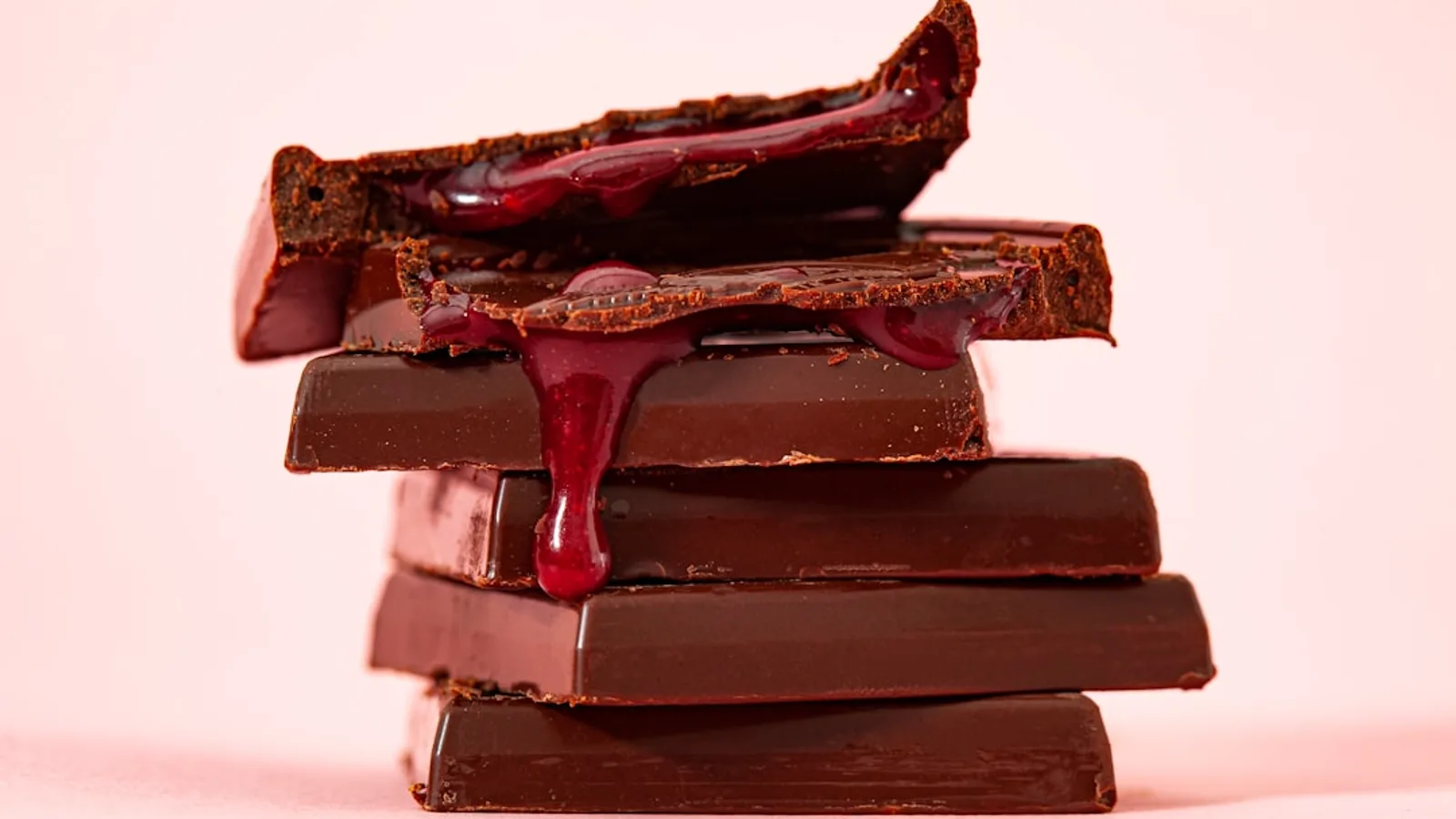
Chocolate has been called a stimulant, a relaxant, an aphrodisiac, and an antidepressant, sometimes all in the same conversation. Most of these claims trace back to a fairly simple observation: people eat chocolate and report feeling better. The question is what’s actually driving that, and the answer turns out to be less about exotic brain chemicals and more about a reward system that is unusually responsive to one specific combination of taste, fat, and texture.
The chemical explanations don’t hold up as well as you’d think
Chocolate contains a long list of biologically active compounds: caffeine, theobromine, tyramine, phenylethylamine, tryptophan, and even two structural analogues of anandamide, the same endogenous compound that binds cannabinoid receptors [1]. This is the basis for a lot of popular claims about chocolate being psychoactive.
The problem is concentration. The methylxanthines (caffeine and theobromine) are present at levels far below what would produce a meaningful stimulant effect from a normal serving [1]. The biogenic amines like phenylethylamine and tyramine are broken down by monoamine oxidase enzymes in the gut, liver, and kidneys before they can accumulate to any relevant degree, and only cause noticeable effects in the rare people who have an MAO deficiency [1]. As for the anandamide analogues, the picture is even weaker: rather than directly activating cannabinoid receptors, they appear to inhibit the breakdown of the body’s own anandamide, and there’s no evidence that eating chocolate, even in large quantities, raises circulating cannabinoid levels [3]. If psychoactive substances explained chocolate’s appeal, cocoa powder and dark chocolate (which have the highest concentrations) should be preferred over milk chocolate, but the opposite is generally true [3].
Serotonin is worth addressing separately because the “chocolate boosts your serotonin” claim is probably the most persistent one. The logic sounds reasonable: carbohydrate intake raises insulin, which clears competing amino acids from the blood and lets more tryptophan cross into the brain, where it becomes serotonin. But this pathway only works when a meal’s protein content is under about 2% of calories, and chocolate is around 5% protein, enough to blunt the effect [3]. The dietary tryptophan changes involved are also far too slow to explain the near-immediate mood lift people report while eating chocolate [3]. Whatever is happening, it isn’t primarily a serotonin story.
Where the reward actually comes from
The stronger explanation involves dopamine and the brain’s reward circuitry, and it has less to do with chocolate’s chemistry than with what chocolate does in your mouth.
The mesolimbic dopamine system, centered on the ventral striatum and nucleus accumbens, is the same circuitry involved in the rewarding effects of most substances people find compelling [3]. Dopamine release here isn’t specific to chocolate. It’s a general response to anticipated pleasure, and it’s activated by the prospect of eating something you find highly palatable, whether that’s chocolate, a favorite meal, or in non-food contexts, a reward you’re expecting [3].
What makes chocolate a particularly strong trigger for this system is its combination of sensory properties: sweetness, fat content, a melting point close to body temperature, and a distinct aroma and flavor profile that together produce a very high hedonic rating [3]. Comparisons across craved foods make this clearer. If the appeal of chocolate were purely about caloric density or fat content, ice cream, cake, or potato chips should be equally satisfying substitutes during a craving. For genuine chocolate cravers, they usually aren’t [3]. This has led researchers to treat “chocolate craving” as something at least partly distinct from general carbohydrate or sweet craving, driven specifically by chocolate’s orosensory identity rather than any single nutrient or compound in it [3].
Brain imaging backs this up directly. A functional MRI study comparing self-identified chocolate cravers to non-cravers found that the sight of chocolate alone produced significantly more activation in the medial orbitofrontal cortex and ventral striatum in cravers [4]. When chocolate’s flavor and its visual presentation were combined, the response in cravers was greater than the sum of the two effects on their own, a pattern called supralinearity, and it showed up specifically in the pregenual cingulate cortex, a region connected to the orbitofrontal cortex [4]. Interestingly, the primary taste cortex itself, the region that processes basic sensory information about what’s in your mouth, showed no difference between cravers and non-cravers [4]. The difference wasn’t in how intensely people tasted chocolate. It was in how their brains valued that taste once it registered.
The orbitofrontal cortex appears to be the key relay point here. It receives input from the taste and visual systems, and its activation correlated directly with how pleasant subjects rated each stimulus [4]. From there it projects to the ventral striatum and pregenual cingulate cortex, both of which showed craver-specific responses. The researchers proposed that this cortical region is where the raw sensory experience of chocolate gets converted into the kind of value signal that drives wanting and eating, with the striatal dopamine response likely following downstream of that cortical evaluation rather than causing it [4].
Opioids and the comfort-eating angle
A separate mechanism worth considering is the endogenous opioid system, which seems to be more relevant to comfort eating than to chocolate craving specifically. Sweet, palatable food triggers release of beta-endorphin in the hypothalamus, producing a mild analgesic and pleasurable effect, and this response can be blocked with opioid antagonists like naloxone [3]. This system appears distinct from the dopaminergic one: dopamine seems to drive the desire for chocolate’s specific hedonic reward, while opioid release is more associated with general comfort eating during emotional distress, where any palatable carbohydrate, not chocolate specifically, will do [3]. People who describe themselves as chocolate cravers and people who eat chocolate to cope with a bad mood may be running two overlapping but mechanistically different processes.
This distinction matters because it explains a pattern that shows up repeatedly in the literature: chocolate eaten for emotional comfort doesn’t reliably improve mood in any lasting way. Several studies found that self-described “chocolate addicts” were more depressed than controls at baseline, and eating chocolate did not measurably improve their mood ratings afterward, even though they reported feeling more content in the moment [3]. Other studies found mood improvements limited strictly to the period of active consumption, with negative mood returning almost immediately once eating stopped, sometimes accompanied by an increase in guilt [3]. One review summarized the pattern by concluding that any mood benefit from chocolate consumption is more likely to prolong a low mood than resolve it when used as a coping strategy, even though the chocolate itself is undeniably pleasurable to eat [3].
The flavanol angle, and why it’s a separate story
Cocoa also contains flavanols, most notably epicatechin, which have gotten considerable research attention for effects on cerebral blood flow and cognition through activation of the BDNF and CREB signaling pathways involved in synaptic plasticity [1,2]. This is a real and mechanistically distinct area of research from the craving and reward story above, and it’s worth being careful not to conflate the two.
Clinical trial evidence on flavanols and depressive symptoms is inconsistent from one study to the next. Some trials have found reductions in depression scores and improvements in mood following weeks of cocoa flavanol supplementation, while several large randomized trials found no significant benefit for mood or cognition at all [2]. One trial linked cocoa extract supplementation to increased plasma homovanillic acid, a dopamine metabolite, which negatively correlated with depressive symptom changes, suggesting a possible dopaminergic pathway distinct from the immediate reward response described above [2]. But the overall body of evidence is limited by small sample sizes and inconsistent dosing across studies, and the effect, where it exists, seems to require sustained intake over weeks rather than a single serving [2]. This is a slower, more uncertain mechanism than the orosensory reward response, and it shouldn’t be confused with the immediate “feels good” experience of eating a piece of chocolate.
So what’s actually going on
The most defensible summary is this: chocolate’s immediate feel-good effect is primarily a sensory and dopaminergic reward response, driven by its specific combination of taste, fat content, and texture rather than by any single psychoactive compound it contains. That response is measurably stronger in people who identify as chocolate cravers, and it shows up in specific reward-related brain regions rather than in basic taste processing. Separately, when chocolate is used as an emotional comfort food during a low mood, the evidence suggests the improvement is usually brief and doesn’t reliably outlast the eating itself. And the longer-term flavanol effects on brain health, while an active area of research, work through a slower and still uncertain pathway that has little to do with why a piece of chocolate feels good in the moment you’re eating it.
None of this makes chocolate anything more or less than what it obviously is: a food engineered, culturally and sensorially, to be extremely rewarding to eat. That turns out to be a perfectly sufficient explanation on its own.
Common Questions
Does chocolate really contain feel-good chemicals like anandamide or endorphins?
Chocolate does contain trace amounts of anandamide-like compounds and can trigger some endorphin release, but the concentrations are too low, and too poorly absorbed, to explain its effect on mood. The reward comes mostly from how it tastes and feels in the mouth.
Is chocolate craving the same thing as sugar craving?
Not exactly. Most chocolate cravers report that no other sweet food substitutes when they specifically crave chocolate, which points to its unique sensory combination of fat, sugar, and flavor rather than a general carbohydrate deficit.
Can eating chocolate actually improve a bad mood?
The evidence is mixed. Chocolate can produce a real hedonic lift while you're eating it, but several studies have found that when it's used as a comfort food during a low mood, the negative mood often returns shortly after, sometimes accompanied by added guilt.
Why do some people crave chocolate so much more than others?
Brain imaging studies show that self-identified chocolate cravers have stronger activation in reward-related regions like the orbitofrontal cortex and ventral striatum when they see or taste chocolate, compared to non-cravers. The difference shows up before any conscious decision to eat is made.
References
- [1]Nehlig A. The neuroprotective effects of cocoa flavanol and its influence on cognitive performance. Br J Clin Pharmacol. 2013
- [2]Li L, Tong HHY. Cocoa polyphenols in brain health: BDNF/CREB-mediated mechanisms in depression, cognition, and the gut-brain axis. Front Nutr. 2026
- [3]Parker G, Parker I, Brotchie H. Mood state effects of chocolate. J Affect Disord. 2006
- [4]Rolls ET, McCabe C. Enhanced affective brain representations of chocolate in cravers vs. non-cravers. Eur J Neurosci. 2007