Why Does Salt Make Everything Taste Better?
Salt does more than season food. It rewires flavor chemistry, and your brain rates its taste differently depending on what your body needs.
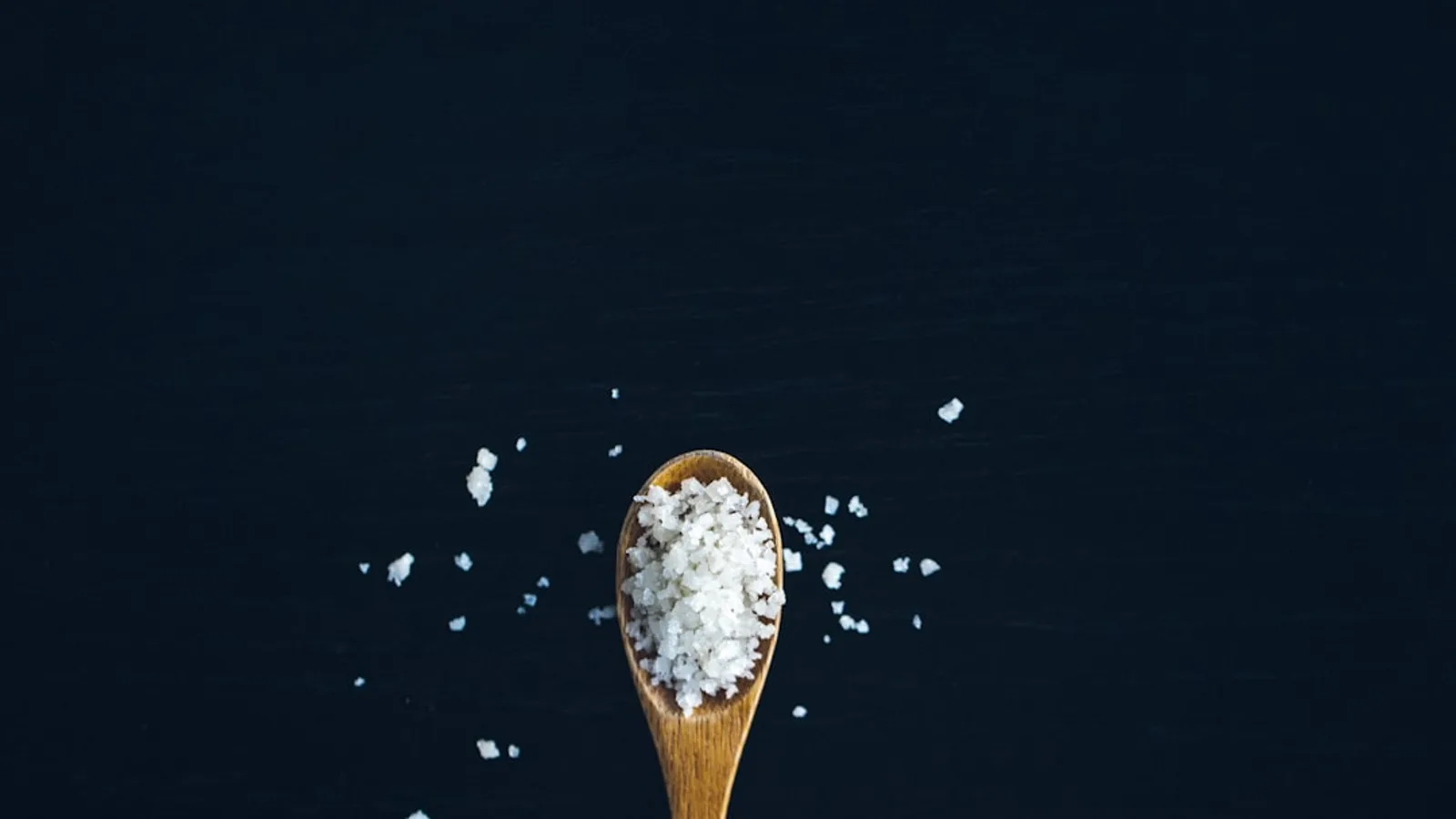
Ask someone why salt makes food taste better and you’ll usually get some version of “it just does.” That answer isn’t wrong, but it skips two separate stories that are both worth understanding. One happens in the pan, where salt is quietly rearranging the chemistry of fat and protein into the compounds we actually taste as flavor. The other happens in your skull, where the same mouthful of salty food can register as pleasant or unpleasant depending on what your body currently needs. Salt isn’t one trick. It’s two systems working at once, and neither gets enough credit on its own.
What salt is actually doing to your food
Most of what we call “flavor” in cooked food, especially meat, comes down to a small set of volatile compounds: aldehydes, ketones, esters, pyrazines, and sulfur compounds. These are produced through four main pathways during cooking and processing: lipid oxidation, protein breakdown, the Maillard reaction, and microbial activity [1]. Salt touches all four.
Fat. Salt speeds up lipid hydrolysis, breaking triglycerides down into free fatty acids. Those fatty acids then oxidize further into aldehydes like hexanal and nonanal, which read as fresh, fatty, or roasted notes [1]. Salt helps this along in a few specific ways: it disrupts cell membranes so oxidants can reach the fat more easily, it frees up iron ions that catalyze oxidation, and it suppresses the enzymes (catalase, glutathione peroxidase, superoxide dismutase) that would otherwise keep oxidation in check [1]. In dry-cured ham, researchers found that as sodium chloride content rose, the share of volatile compounds coming from lipid oxidation climbed steadily, reaching close to 40% of the total [1].
Protein. Salt also denatures proteins and pulls them into solution, a phenomenon researchers call salting-out. As proteins unfold, hydrophobic amino acids and small peptides that were previously buried inside the protein structure get exposed [1]. That matters because those newly exposed amino acids are the raw material for the Maillard reaction and Strecker degradation, the processes that generate roasted, nutty, and caramel-like aromas during cooking [1]. Salt changes ionic strength enough to measurably shift the surface hydrophobicity of myofibrillar proteins, converting them from a compact folded state to a partially unfolded one that has far more surface area exposed for these downstream reactions [1].
Microbes. In fermented and cured products, salt concentration determines which microorganisms thrive. Under low to moderate salt, beneficial bacteria like Lactobacillus stay active and produce lactic acid, esters, and alcohols that add sourness, fruitiness, and complexity. Push salt too high and you inhibit those species along with everything else, leaving a simpler, flatter flavor profile [1].
There’s a ceiling, and it’s not that high
Here’s the part that surprises people: salt’s flavor-boosting effect has a fairly narrow sweet spot. Across the meat science literature, that threshold generally sits somewhere between 1.5% and 2.5% salt content [1]. Below it, flavor compound formation is muted. Above roughly 3% to 4%, lipid oxidation tips over into over-oxidation, generating pentanoic and hexanoic acid, which read as rancid rather than savory [1]. High salt concentrations also accelerate protein oxidation to the point of producing carbonyls and other oxidation byproducts that toughen texture and dull flavor rather than enhancing it [1]. So the common assumption that more salt equals more flavor only holds for about the first couple of percentage points. After that you’re actively working against yourself.
Salt can also change how sweet or savory something tastes without adding a single new compound
Separately from the chemistry happening in the food itself, salt also interacts with how your tongue interprets other tastes already present. Umami compounds, in particular, have a synergistic relationship with saltiness. In sensory testing, adding small amounts of umami peptides to a 0.3% NaCl solution pushed its perceived saltiness up to the equivalent of 0.4% to 0.6% NaCl, essentially making a weaker salt solution taste stronger without adding more sodium [2]. Researchers have traced part of this effect to TMC4, a chloride channel identified as a likely salty taste receptor. Molecular docking studies found that many umami peptides, most of which carry a negative charge at normal mouth pH, can bind to TMC4 in a way that resembles how chloride ions activate salty taste in the first place [2]. It’s a reminder that “salty” isn’t purely a measure of sodium concentration. It’s also a matter of what else is on the receptor at the same time.
Why the exact same bite of food can taste completely different depending on your body
This is where things get genuinely strange. Concentrated salt, at seawater-like intensity, is not something most animals like. Rats will actively reject it under normal conditions. But induce sodium depletion in those same rats, and that identical solution becomes something they seek out and consume eagerly [3, 4]. This flip in preference is called alliesthesia, and it isn’t subjective or vague. It shows up directly in neural firing patterns.
In one study, rats given furosemide to deplete their sodium later showed a 407% increase in voluntary intake of concentrated salt solution, along with a genuine shift in how their taste reactions looked on video: gapes and headshakes (classic disgust responses) dropped away, replaced by tongue protrusions and paw licking, the same behaviors rats show toward sugar [4]. The taste hadn’t changed. The animal had.
Researchers tracking neurons in the ventral pallidum, a brain region involved in coding reward, found that firing rates to that same salt solution roughly doubled once the animals were sodium-depleted, rising to match the firing rates normally reserved for sucrose [4]. Before depletion, salt-evoked firing was less than a third the size of the sucrose response. After depletion, salt and sucrose were essentially indistinguishable to these neurons [4]. The switch was specific to salt, too. Sucrose responses stayed flat across every test day regardless of the animal’s sodium status [4].
A separate line of research on the nucleus accumbens found a related but distinct pattern. Neurons in the accumbens shell showed increased firing to salt when it was undesired and decreased firing when it became preferred following depletion, which fits with prior work suggesting decreased accumbens activity tends to accompany reward-seeking behavior [3]. Neurons in the accumbens core, by contrast, didn’t shift until several days after the animals had already restored their sodium levels, suggesting this region may be doing something closer to longer-term learning rather than tracking moment-to-moment palatability [3].
What this means for the rest of us
None of this was tested in humans directly, but the mechanism lines up with something people already report anecdotally: food tastes more intensely good after a hard workout, a salty sweat-heavy day, or a period of eating bland or low-sodium food. Your taste receptors haven’t changed. Your brain’s reward circuitry has recalibrated what that taste is worth to you right now.
Put the two halves of this story together and you get a fuller picture of why salt does so much heavy lifting at the table. On the food side, it’s rearranging fat and protein into the aldehydes, ketones, and pyrazines that carry roasted, nutty, and savory character, and doing it most effectively within a fairly narrow concentration window. On the perception side, it can borrow strength from other tastes like umami through shared receptor mechanisms, and its hedonic value gets tuned in real time by your body’s actual sodium needs. Salt isn’t a single lever. It’s closer to a coordinated system spanning the pan and the brain, and both halves have to be working for a dish to land.
Summary
Salt reshapes flavor chemistry directly, accelerating lipid oxidation, protein unfolding, and the Maillard reaction to generate the compounds we register as roasted, nutty, and savory, though this effect peaks at a fairly low concentration and reverses if you go past it. Separately, salt taste itself isn’t fixed: umami compounds can amplify it at the receptor level, and your brain’s reward response to salty taste shifts dramatically based on your physiological sodium status, turning a normally unpleasant intensity into something actively craved. The chemistry explains why a pinch of salt makes a dish taste finished. The neuroscience explains why that same pinch can taste different on different days.
Common Questions
Does adding more salt always make food taste better?
No. Research on meat products shows flavor compounds peak at moderate salt levels, generally in the 1.5% to 2.5% range, and decline again once salt content passes about 3% to 4%. Past that point you get over-oxidation and flat, sometimes off-tasting results.
Is it true that salty food tastes better when your body is low on sodium?
Yes. Studies in rats show that a concentrated salt taste that is normally rejected becomes actively preferred after sodium depletion, and this shift shows up directly in brain activity, not just behavior.
Does salt actually create new flavor compounds, or does it just mask blandness?
Both, but the flavor creation part is underrated. Salt accelerates lipid oxidation, protein breakdown, and the Maillard reaction, all of which generate the aldehydes, ketones, and pyrazines responsible for roasted, nutty, and savory aromas.
Why do some foods taste more amplified with salt than others?
It depends on how much fat and protein is available for salt to act on. Salt's effects on flavor mostly run through lipid and protein chemistry, so fattier, protein-rich foods like meat have more raw material for salt to transform.
References
- [1]Liang E, et al. Effect of salt on volatile flavor substances in meat products-a review. LWT. 2025
- [2]Xie X, et al. The enhancement and mechanism of the perception of saltiness by umami peptide from Ruditapes philippinarum and ham. Food Chemistry. 2023
- [3]Loriaux AL, Roitman JD, Roitman MF. Nucleus accumbens shell, but not core, tracks motivational value of salt. J Neurophysiol. 2011
- [4]Tindell AJ, et al. Ventral pallidum firing codes hedonic reward: when a bad taste turns good. J Neurophysiol. 2006