Why Does Aged Cheese Taste Better?
Aged cheese owes its bold flavor to proteolysis, lipolysis, kokumi-active peptides, and the Maillard reaction working together over months of ripening.
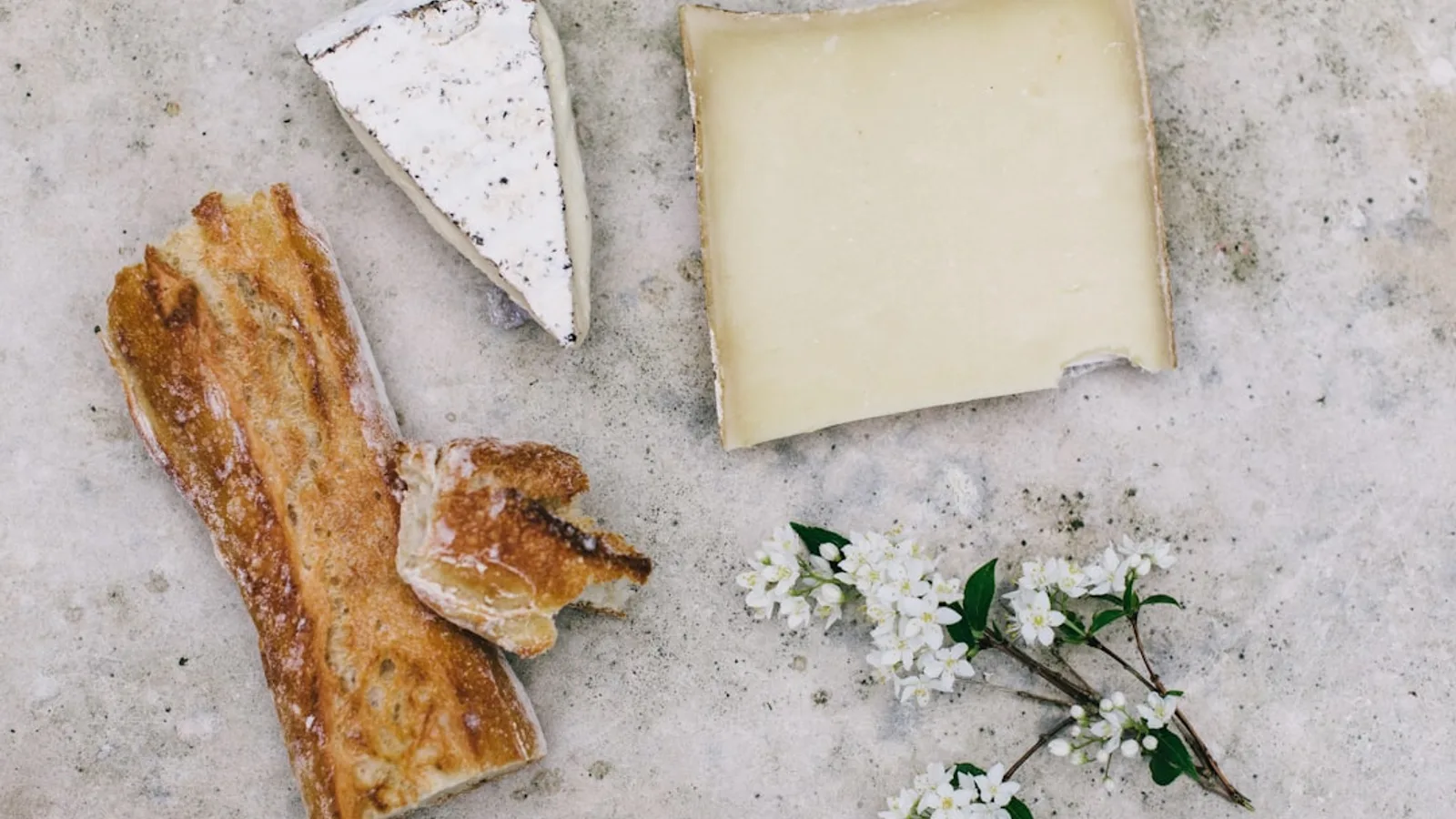
There’s a reason the cheese counter charges more for the wedge that’s been sitting in a cave for two years than the one that left the vat last week. In a consumer study cited in recent cheese research, 54% of people preferred aged cheeses like Gouda or Cheddar over their shorter-matured counterparts, while only 16% went the other way [1]. That’s not just a marketing story about scarcity and price. Something is actually changing inside the cheese, at the molecular level, the whole time it sits there.
Cheese ripening breaks down into three overlapping categories of chemistry: proteolysis (protein breakdown), lipolysis (fat breakdown), and a slower set of secondary reactions that convert the products of the first two into the compounds that actually hit your tongue and nose [2]. None of these run in isolation. They feed into each other, and the longer a cheese sits, the further the whole system pushes toward flavor compounds that simply don’t exist in a young block.
The protein cascade
Fresh curd is mostly casein, a family of large, relatively bland proteins. Ripening takes those proteins apart in stages. Residual rennet (usually chymosin) makes the first cuts, breaking the caseins into large peptide fragments. Plasmin, an enzyme that comes from the milk itself, works alongside it, particularly in cheeses cooked at high temperatures where chymosin activity is reduced [2]. From there, bacteria take over. Lactic acid bacteria carry a whole toolkit of proteinases and peptidases, enzymes that chop the intermediate-sized peptides down into shorter chains and eventually into free amino acids [2].
This matters for flavor in two ways. First, some of the peptides produced along the way are themselves flavor-active, including bitter peptides released mainly from the breakdown of αS1- and β-casein [1][2]. A cheese that’s proteolyzed unevenly can end up bitter for this reason. Second, and more importantly for long-aged cheese, this cascade produces a growing pool of free amino acids, and those amino acids are the raw material for essentially everything interesting that happens later in ripening.
The kokumi effect
This is where things get specific to aged cheese, and it’s a taste concept that doesn’t get much attention outside of Japanese food science: kokumi. Kokumi isn’t a taste on its own the way sweet or salty is. It’s described as thickness, mouthfulness, and continuity, essentially the sensation of a food’s flavor building and lingering rather than hitting once and fading [1]. It’s the difference between a young Gouda that tastes fine and a five-year Gouda that seems to coat your whole mouth.
The molecules responsible are γ-glutamyl dipeptides, a specific class of small peptides where glutamic acid links to another amino acid through its side-chain carboxyl group rather than the normal peptide bond position. This linkage doesn’t exist anywhere in the original casein chain. It has to be built from scratch during ripening, by an enzyme called γ-glutamyltransferase (GGT), which grabs a glutamine molecule (released earlier by proteolysis) and attaches it to another free amino acid [1].
A 2025 analysis of 122 commercial cheeses, with ripening times ranging from two weeks to 15 years, tracked exactly how this plays out. Young cheese under three months old averaged 15.6 μmol/L of total γ-glutamyl dipeptides. After two years, that number climbed to 443 μmol/L, a roughly 30-fold increase [1]. The growth wasn’t linear the whole way through either; it kept climbing for about three years before leveling off, with the two oldest cheeses in the dataset (a 5-year Parmesan and a 3.5-year farmer’s cheese) hitting the highest concentrations recorded [1].
This also explains why a young blue cheese can taste more “developed” than a much older Cheddar. It’s not cheating exactly, it’s just a different enzymatic shortcut to the same chemistry.
Fat doesn’t just sit there either
Lipolysis, the breakdown of triglycerides into free fatty acids, runs on a separate track from proteolysis, but it matters just as much for the flavor arc of an aged cheese. Milk fat is rich in short-chain fatty acids, and once they’re liberated by lipases (from the milk itself, the microflora, or in some Italian styles, from rennet paste), they contribute directly to flavor at very low concentrations [2]. Cheddar, for example, shows a steady climb in total free fatty acids, and hard Italian varieties and blue cheeses push lipolysis much further than something like Gouda or Swiss [2].
Free fatty acids don’t stop at tasting like themselves, either. They’re precursors. React one with ethanol (itself a byproduct of lactose fermentation or amino acid breakdown) and you get an ester, the compound class behind a lot of the fruity, sometimes soapy notes in aged cheese [2]. In blue cheese specifically, Penicillium roqueforti oxidizes free fatty acids into methyl ketones, the compounds responsible for blue cheese’s sharp, almost solvent-like character, with the process running fastest in the pH 5 to 7 range that most blue cheeses sit in [2].
Browning without heat
There’s one more piece that gets less attention than proteolysis or lipolysis, and it happens even though cheese is never baked or roasted: the Maillard reaction. It’s usually associated with seared steak or toasted bread, but the same basic chemistry (reducing sugars reacting with amino groups on proteins) runs slowly at cave temperature over months of ripening [3].
A 2012 study tracking this in both a fast-ripening acid curd cheese and a set of Gouda cheeses at different ages found that the early-stage Maillard marker (a compound called furosine) declined over ripening, while later-stage products, specifically Nε-carboxymethyllysine and Nε-carboxyethyllysine, increased [3]. In the acid curd cheese, those two compounds rose by 38% and 115% over 21 days. Across Gouda cheeses graded young, middle-aged, and old, the same late-stage marker increased by 135% with age [3]. The researchers also found that the decline of a reactive intermediate called methylglyoxal tracked almost perfectly with the rise of one of these end products, strong enough to fit a clean linear relationship [3].
This isn’t proof that Maillard chemistry is the star of aged cheese flavor the way kokumi peptides are. What it does show is that cheese is running the same slow nonenzymatic browning chemistry found in every roasted or toasted food, just stretched out over months instead of minutes, using the free amino acids that proteolysis keeps supplying.
It’s the accumulation, not any one thing
None of these processes explain aged cheese on their own. Proteolysis alone gives you bitterness risk and a growing amino acid pool. Lipolysis alone gives you rancidity if it goes too far. Kokumi peptides need proteolysis to happen first before GGT even has raw material to work with, and the Maillard reaction is drawing from that same amino acid pool on its own slow timeline. What makes a properly aged cheese taste different from a young one is that all of these systems have had enough time to run deep, layering thickness, developed fat-derived aroma, and background browning notes on top of whatever the cheese tasted like at six weeks.
That’s also why not every cheese benefits from more time. Push proteolysis too far in the wrong style and you get bitterness instead of depth. Push lipolysis too far and you get rancidity instead of nuance. The cheeses that reward years of aging are the ones built, through their starter cultures, moisture content, and salt levels, to run this chemistry slowly and evenly rather than fast and sloppily. Given the right starting conditions, though, time is doing real, measurable chemical work, not just letting a wheel of cheese sit around looking impressive.
Common Questions
Is kokumi the same thing as umami?
No, though they're often confused. Umami is a basic taste on its own, driven mostly by glutamate and nucleotides. Kokumi doesn't taste like anything by itself, it amplifies and extends whatever taste is already there, which is why kokumi-active cheese peptides are described in terms of thickness and mouthfulness rather than a flavor.
Why does blue cheese taste so much more intense for its age compared to a hard cheese?
Blue and white mold cultures bring their own high levels of the enzyme that builds kokumi peptides, plus extra proteolytic activity from the mold itself. That lets a blue cheese ripened for only a few months reach glutamyl dipeptide concentrations that a hard cheese would otherwise need years to reach.
Does all cheese get better with age?
No. Fresh and soft cheeses like mozzarella or cottage cheese are built to be eaten young, and their production doesn't set up the enzyme systems needed for long ripening. Only cheeses made for semi-hard, hard, or mold-ripened maturation actually accumulate the compounds behind aged flavor over time.
What causes the crunchy white crystals sometimes found in aged cheese?
Those are usually tyrosine crystals, an amino acid that becomes concentrated enough during long proteolysis to crystallize out. Some cheeses also form calcium lactate crystals from lactic acid metabolism. Both are a normal sign of extended ripening rather than a flaw.
References
- [1]Frohlich SM, et al. Towards prediction of maturation-dependent kokumi taste in cheese by comprehensive high throughput quantitation of glutamyl dipeptides. Food Chemistry, 2025
- [2]McSweeney PLH. Biochemistry of cheese ripening. International Journal of Dairy Technology, 2004
- [3]Spanneberg R, Salzwedel G, Glomb MA. Formation of early and advanced Maillard reaction products correlates to the ripening of cheese. J Agric Food Chem, 2012